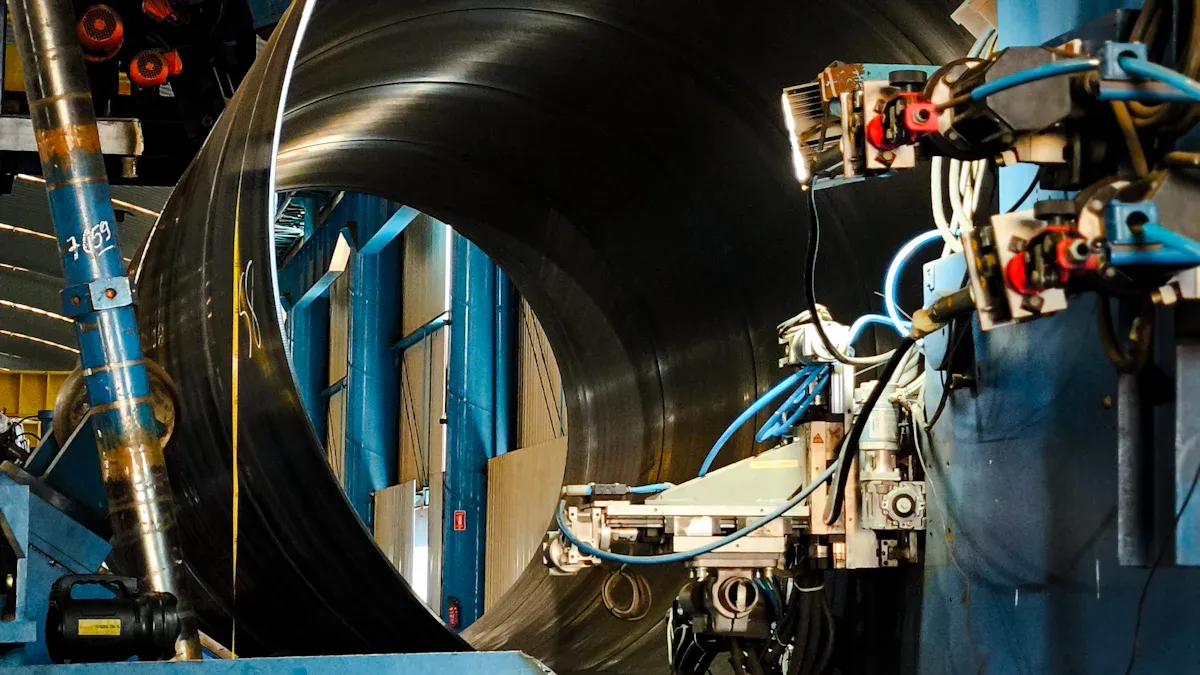
Choosing the right tube roll forming machine helps your production line do well. You need to pick machine features that fit your needs. This helps you get the best value. Picking the wrong machine can waste resources. It can also lower how much you make. Costs can go up too. Every choice you make changes the value your work gives.
Key Takeaways
Pick a tube roll forming machine that matches what you need. This helps you work faster and spend less money.
Think about what materials you will use and how thick they are. This stops problems like breaking or leaking when you make tubes.
Check the roll tooling quality and motor power. This makes sure your tubes are made right every time.
Think about what you might need in the future. This helps you avoid problems as your business gets bigger or rules change.
Look at the total value, not just the price, when you choose a machine. This helps you avoid surprise costs and keeps your business strong for a long time.
Tube Roll Forming Machine Basics
What Is a Tube Roll Forming Machine?
A tube roll forming machine helps you shape metal strips into tubes. You feed a flat metal strip into the machine. The machine uses a series of rollers to bend the strip. Each roller makes the metal take a new shape. By the end, you get a finished tube. You use tube roll forming machines in many industries. These machines help you make strong and uniform tubes. You can use them for tube manufacturing, construction, or even furniture.
You will find that roll forming machines come in different sizes. Some machines work best for small tubes. Others can handle large and thick tubes. You need to choose a tube roll forming machine that matches your needs. If you pick the right one, you get better results and save money.
Tip: Always check the size and type of tube you want to make before you choose your roll forming machine.
How the Roll Forming Process Works
The roll forming process is a type of metal forming process. You start with a coil or strip of metal. You feed this metal into the roll forming machine. The machine has many rollers set in a row. Each roller bends the metal a little more. The metal moves through the rollers and slowly takes the shape you want.
Roll forming gives you tubes that are straight and strong. You can make many tubes quickly. This process works well for high-volume manufacturing. You also get less waste because the machine shapes the metal with care. Roll forming machines help you keep your production line fast and efficient.
Here is a simple list of steps in the roll forming process:
Load the metal strip into the roll forming machine.
The strip passes through several rollers.
Each roller bends the metal a bit more.
The final roller gives the tube its finished shape.
The machine cuts the tube to the right length.
Roll forming is a key part of modern manufacturing. You can rely on roll forming machines to make quality tubes for many uses.
Why Machine Selection Matters
Impact on Production and Costs
When you choose a tube roll forming machine, you make a big decision for your business. The right machine helps you work faster and save money. If you pick a machine that matches your needs, you can make more tubes in less time. You also use less energy and reduce waste. This means you spend less on materials and power.
If you select the wrong machine, you may face problems. Your machine might break down often. You could see more scrap metal and wasted time. This can lead to higher costs and lower profits. You may also need to stop production to fix issues. That can slow down your whole operation.
Note: A good roll forming machine keeps your production line running smoothly and helps you meet your deadlines.
Here are some ways the right machine impacts your costs:
Role in Roll Forming Technology
Roll forming technology keeps changing. New machines offer better speed, accuracy, and safety. When you choose a machine, you need to think about how it fits with your current setup. You also want to plan for future needs.
You use roll forming to shape metal into strong, straight tubes. The right machine lets you use the latest features. You can add new tools or upgrade parts as your business grows. This helps you stay ahead of your competition.
A table can help you see the benefits of modern roll forming machines:
Feature | Benefit |
Faster setup | More production time |
Better controls | Fewer mistakes |
Stronger frames | Longer machine life |
Easy upgrades | Grows with your business |
When you understand roll forming technology, you make better choices. You get machines that help you now and in the future.
Key Factors in Choosing Roll Forming Machines
Material Compatibility and Thickness
You must pick a roll forming machine that matches your material. Most machines can work with metal and non-metal materials. You can use materials as thin as 0.010 inches. Some machines can handle materials thicker than 0.250 inches. Thin materials need careful control. This stops them from bending or warping. Thick materials need more force. Strong machines help keep the quality high. If you use the wrong machine, you may get bad results. Your machine could even break.
Roll forming machines work with many kinds of materials.
Thin materials need careful handling to avoid problems.
Thick materials need strong machines and more power.
Tip: Always check your material’s thickness and type before picking a tube roll forming machine. This helps you save money and keeps your line working well.
Roll Tooling Quality and Motor Power
Good roll tooling helps you make better tubes. Strong rollers last longer and keep their shape. This means you get more accurate tubes with fewer mistakes. The motor is important too. A strong motor keeps the machine working well, even with tough materials. If you want fast and smooth production, pick a machine with enough power.
Pick tooling made from hard materials that last.
Make sure the motor fits your material’s thickness and type.
Good tooling and motors help your machine work better and break less.
Structural Strength and Machine Size
Think about how strong and big your machine needs to be. If you make tubes for buildings or heavy jobs, you need a strong frame. For example, A500 tubes are used in towers and buildings. A513 tubes are used in cars and farming. Small tubes under 2 inches use ASTM A-513. Big tubes with thick walls use ASTM A-500. The right size and strength help your tubes last and work well.
Strong frames hold up heavy and thick materials.
Machine size should fit your biggest tube.
Good strength means your machine will last longer.
Output Profile and Production Volume
Think about the shapes and number of tubes you want to make. Harder tube shapes and stronger materials need special machines. Roll forming is best for making lots of tubes fast. It works well for long tubes with tricky shapes. If you want special shapes or need high accuracy, get a custom roll forming machine. Making lots of tubes saves money with roll forming.
Hard tube shapes need advanced roll forming machines.
Making many tubes needs machines built for speed.
Custom machines help you make special tubes.
Number of Forming Stands and Strip Width
The number of forming stands decides how many bends you can make. More stands let you make more detailed tube shapes. The strip width is limited by the space between the rolls. This sets how big your tubes can be. If you want big or special tubes, make sure your machine has enough stands and space.
Note: More stands and wider roll space let you make many tube shapes and sizes.
Ease of Maintenance and Calibration
Easy maintenance helps your machine last longer. Regular checks and cleaning stop breakdowns. Lubricating moving parts lowers wear and keeps things running well. Cleaning the hydraulic system stops dirt from causing trouble. Calibrating the controls makes sure your tubes are the right size. Good machines make these jobs easy, so you get steady results and less downtime.
Maintenance Task | Contribution to Reliability |
Check machine parts often | Stops damage and helps your machine last longer. |
Lubricate moving parts | Lowers friction and keeps things working well. |
Clean the hydraulic system | Stops dirt and keeps everything working right. |
Calibrate the control system sometimes | Makes sure your tubes are always the right size. |
Keeping your roll forming line in good shape helps you work fast and make quality tubes every time.
Types of Roll Forming Machines
Manual, Semi-Automatic, and Automatic
There are different roll forming machines for different jobs. Manual machines need you to do most things by hand. You set up the machine and feed in the material. You also move the rollers yourself. These machines are good for small jobs or testing new ideas. You get more control, but it takes more time and work.
Semi-automatic machines help you work faster. The machine does some steps, like moving the material or cutting tubes. You still need to watch and make changes if needed. These machines are good for medium jobs. They give you a mix of control and speed.
Automatic machines do almost everything for you. You set up the machine and it runs by itself. It feeds the material, shapes it, and cuts it. You get fast work and steady quality. Automatic machines are best for big jobs where you need many tubes quickly.
Tip: Use automatic roll forming machines if you want to make tubes fast and keep the quality high.
Machine Type | Control Level | Best Use Case | Performance |
Manual | High | Small jobs, prototyping | Basic |
Semi-Automatic | Medium | Medium runs | Good |
Automatic | Low | Large production | Excellent |
Specialized Machines for Profile Shapes
Some roll forming machines are made for special shapes. These machines let you make custom tubes that normal machines cannot make. You can use them to design tubes with special curves or sizes. This helps you meet special needs in your work.
Specialized machines help you save money by using less material. You do not have to set up the machine again for each shape. The machine turns flat sheets into finished tubes fast. This saves time and helps you work better.
With these machines, you get more control over the shape. You can make tubes that fit your needs exactly. You do not have to use only standard shapes. You can change your work for new projects without changing everything.
Note: Custom roll forming machines let you make special tubes with great accuracy and high performance.
Evaluating Roll Forming Machine Suppliers
Manufacturer Experience and Reputation
When you look for roll forming machine suppliers, check their history. Good suppliers have made quality machines for many years. You want a company that can change machines to fit your needs. The best suppliers follow rules and help you with problems. They should answer your questions about how the machine works. Reading reviews and stories from other customers helps you know if they are good.
They have made quality roll forming machines before.
They can change machines for your business.
They follow rules and standards.
They offer help when you need it.
They answer important questions about the machine.
Tip: Always read reviews and ask for references before you pick a supplier.
Quality Standards and Certifications
Quality standards show that a supplier cares about making good machines. Certifications prove the company meets safety and quality rules. You should find suppliers with the right certificates for your work. Here are some common certificates you might see:
Certification | Description |
AS9100D | Used by aerospace companies for quality management. |
IATF 16949:2016 | Used by car suppliers for quality management. |
Nadcap | Used by aerospace suppliers for things like welding. |
ASME Boiler and Pressure Vessel Certification | Used by companies working with boilers and pressure vessels. |
ISO 9001:2008 | General certificate for quality management. |
ISO 9001:2015 | New version for quality management. |
Always ask to see these certificates when you look at roll forming machines.
Customer Support and Service
Good customer support helps your roll forming line work well. You need a supplier who helps you fast when you have trouble. Look for companies that teach you, give spare parts, and offer technical help. A good supplier helps you keep your machines working. They answer your questions and fix problems quickly. This help stops delays and keeps your work going.
Note: Good after-sales support keeps your machines working and helps your business grow.
Common Mistakes in the Roll Forming Process
Overlooking Material Compatibility
It is important to match your materials with your roll forming machine. If you skip this step, you can have big problems. Tubes might break or leak when tested under pressure. Sometimes, connections look fine but fail after heating or cooling. You might notice flow rates that do not work for you. Using the wrong material can even cause health or safety risks. These issues can stop your work and waste your supplies.
Tubes can burst if you do not check fitting stress.
Tubes may leak after cleaning because of tired material.
Bad fitting design can make flow rates miss your goal.
Wrong materials can cause safety or quality problems.
You should always make sure your materials fit your roll forming machine. This step helps you avoid many mistakes in the roll forming process.
Ignoring Future Production Needs
You might only think about what you need now when picking a roll forming machine. This can hurt your business later. Industries change over time. Rules and standards change too. If your machine cannot meet new rules, you may have trouble.
Industries change, and so do rules and standards. If your roll forming machine does not meet new standards, it can hurt your business. Not following rules can mean fines, lost jobs, and a bad reputation.
You should plan for future projects and changes. Thinking ahead helps your business stay strong and ready for new things.
Focusing Only on Price
You might want to save money by choosing the cheapest machine. This choice can cost you more later. Cheap machines can have hidden costs. You may pay more for repairs or new parts. Changeovers can take longer and slow down your work. Poor quality can cause mistakes and delays.
Hidden costs can make you spend more overall.
You may need more repairs or new tooling.
Low quality can cause errors and slow production.
You should look at the total value of a roll forming machine, not just the price. Quality and support are just as important as cost. This way, you get the best results from your roll forming process.
Step-by-Step Selection Guide
Assess Production Requirements
Begin by thinking about what you need to make. Decide what kinds of tubes you want. Write down the sizes, shapes, and materials you will use. Figure out how many tubes you need each day or week. This helps you pick the right roll forming machine. If you want special shapes, you might need a custom roll forming machine. Check if you need your tubes to be very exact. Knowing these things helps you avoid mistakes and keeps your work running well.
Tip: Make a list of your tube sizes, materials, and how many you need before you look for a machine.
Compare Machine Specifications
Now, look at what each tube roll forming machine can do. See how each machine handles roll forming jobs. You want a machine that fits your needs and works well. Use a table to compare the machines:
Specification Type | Details |
Operational Checks | Make sure all parts work and there are no warning signs. |
Software Usability | Pick machines with easy controls, online help, and good support. |
Machine Features | Look at roll diameters, strip width, and if you can use a custom viewport. |
Check if the machine can work with your materials and tube sizes. Look for things that help you work faster and more accurately. Good machines waste less and give you better results.
Request Demos and Quotes
Ask the supplier to show you how the roll forming machine works. Watch the machine use your materials. This helps you see if it works well and if there are any problems. Ask for prices from different suppliers. Compare the cost, help, and extra features. Do not just pick the cheapest one. Think about how the machine will help you in the long run. If you want special tubes, ask if the supplier can make a custom roll forming machine for you.
Note: Seeing a demo helps you know if the machine can do what you need for your roll forming and manufacturing work.
You can pick the best tube roll forming machine by using simple steps. First, write down what you need for your production. Next, look at each machine’s performance and energy use. Check if you can change the machine to fit your needs. Make a checklist to compare how well each machine works and what it costs. Always read reviews before you choose a manufacturer. Some mistakes are easy to make. Do not forget about long-term value. Do not skip regular maintenance. Make sure your machine matches your production goals. This helps your work go faster and stops delays.
FAQ
What materials can you use with a tube roll forming machine?
You can use steel, stainless steel, aluminum, and copper. Always check your machine’s manual for the best results. Some machines work better with certain materials. Ask your supplier if you have special needs.
How often should you maintain your roll forming machine?
You should check your machine every week. Clean and lubricate moving parts often. Schedule a full inspection every few months. Regular care helps your machine last longer and work better.
Can you change tube sizes on the same machine?
Yes, you can change tube sizes. You may need to adjust or swap out the rollers. Some machines make this easy. Others take more time. Always follow the instructions in your manual.
What safety steps should you follow when using a roll forming machine?
Always wear safety glasses and gloves. Keep your hands away from moving parts. Turn off the machine before making adjustments. Read the safety guide before you start.
How do you know if a machine fits your production needs?
Make a list of your tube sizes, materials, and daily output. Compare these needs with the machine’s specs. Ask for a demo if you are not sure. A good fit means less waste and better results.