In the modern era of construction and industrial automation, custom composite floor deck roll forming machines have become one of the most essential innovations driving efficiency, precision, and durability in building systems.
This comprehensive guide will walk you through everything you need to know about these machines — from how they work, what makes them “custom,” the technical specifications, and why global manufacturers and contractors increasingly rely on them.
If you’re looking for a high-performance, customizable floor deck roll forming solution, this guide — inspired by ProfileForming.com — will help you make informed decisions for your business.
What Is a Custom Composite Floor Deck Roll Forming Machine?
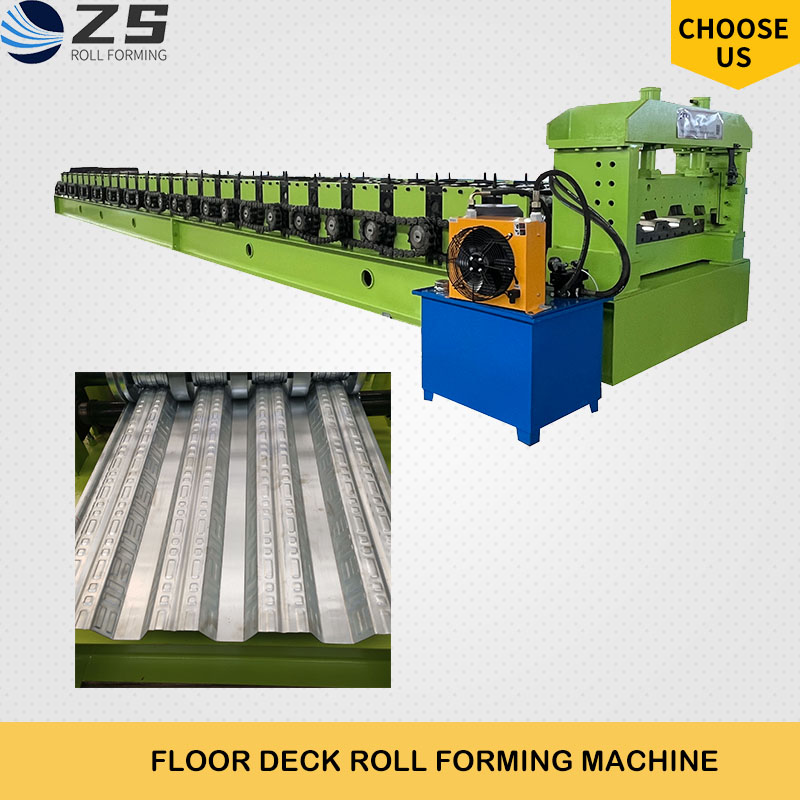
A custom composite floor deck roll forming machine is a specialized piece of manufacturing equipment designed to produce steel floor decking panels. These panels act as the base layer in many modern buildings, supporting concrete slabs and forming strong composite floor systems. In simple terms, it turns flat metal coils into corrugated steel decks used for construction — fast, accurate, and cost-effective.
Understanding the “Composite” Concept
The word composite means combining steel and concrete to create a structure that’s stronger than either material alone. The metal deck works like a mold for the concrete, locking together through ribs and embossing patterns. Once hardened, they act as a single structural unit.
| Component | Function | Benefit |
| Steel Deck | Acts as permanent formwork | Reduces need for temporary support |
| Concrete Slab | Bonds with the deck surface | Improves stiffness and fire resistance |
| Embossed Ribs | Enhance bonding strength | Prevents slippage between layers |
This system helps engineers design lighter yet stronger floors, saving time and material in large-scale construction.
What Makes It “Custom”?
Not every project uses the same deck design — that’s where customization comes in.
A custom roll forming machine lets manufacturers produce different profiles, rib shapes, and depths without needing multiple machines.
Typical customization options include:
Profile type: B-Deck, N-Deck, F-Deck, Dovetail, or others.
Material thickness: 0.7 mm – 1.2 mm steel.
Coil width: 1000 mm – 1250 mm.
Rib height: from 38 mm to 75 mm.
Surface patterns: plain or embossed for better bonding.
Automation level: manual, semi-automatic, or fully automatic.
Custom designs ensure each deck fits its purpose — from light commercial roofing to heavy-load industrial flooring.
Core Components of the Machine
Inside the line, several systems work together seamlessly.
Each part serves a unique role in producing a perfect metal deck.
Decoiler – Holds and feeds the steel coil into the line.
Feeder Table – Aligns and straightens the sheet for precise entry.
Roll Forming Stations – A series of rollers gradually shape the steel.
Hydraulic Cutting System – Cuts panels to exact length without waste.
Control Cabinet (PLC) – Manages speed, pressure, and synchronization.
Output Table – Stacks finished decks neatly, ready for use.
These systems run continuously, delivering high throughput while minimizing downtime.
How the Forming Process Works
Think of it as metal origami at industrial speed.
The sheet moves through each roller station, bending a little more each time.
At the end, it exits in the final deck profile — straight, strong, and uniform.
Simplified Process Flow
Coil Loading → Leveling → Roll Forming → Cutting → Stacking
Each stage matters.
A well-engineered setup, like those made by professional manufacturers, keeps tolerance tight — usually within ±0.05 mm — even at 12 to 13 meters per minute.
Applications in Modern Construction
These machines create the foundation for:
High-rise office buildings.
Multi-story parking garages.
Industrial plants and warehouses.
Shopping centers and stadiums.
Composite floor decks made by such machines help reduce floor thickness, shorten construction cycles, and improve overall stability.
So when you see sleek steel-concrete floors in tall buildings — yes, this machine made it happen.
Why Choose a Custom Composite Floor Deck Roll Forming Machine?
Choosing a custom composite floor deck roll forming machine isn’t just about buying equipment — it’s about investing in efficiency, precision, and flexibility. These machines let manufacturers produce stronger, lighter, and perfectly shaped floor decks for any construction project. Let’s break down why going “custom” really matters.
1. Tailored Design Flexibility
Every project has its own story — different spans, loads, and looks.
A custom roll forming machine allows builders to shape that story their way.
| Feature | Standard Machine | Custom Machine |
| Deck Profile | Fixed pattern | Adjustable to any profile |
| Coil Width | Limited to one range | Configurable from 1000–1250 mm |
| Rib Height | Fixed size | 38–75 mm, project specific |
| Control System | Basic PLC | Upgraded touchscreen + sensors |
| Material Options | One or two | Galvanized, color-coated, stainless steel |
Custom design means engineers can choose rib shapes, embossing, and surface finishes.
They can even request dual-purpose lines to produce both roof and floor decks on the same machine. It saves time, space, and money.
2. Boosted Production Efficiency
Speed matters in manufacturing. A custom floor deck roll forming machine doesn’t just form steel; it forms time savings.
Modern systems use rafted mills and quick-change rollers, so switching from one profile to another takes minutes instead of hours.
Efficiency Highlights:
Forming speed up to 12–13 meters per minute.
Closed-loop cutting control ensures consistent panel length.
Continuous forming means no wasted coil sections.
Minimal downtime between changeovers.
When the press keeps flying, production keeps earning.
3. Superior Product Quality
Strong buildings need strong decks.
The machine’s precision design reduces shaft deflection, keeping each panel uniform from start to end.
It also minimizes scrap — meaning better material yield.
Quality Drivers
Heavy-duty rollers made from 45# steel, hardened and chrome-coated.
Bearings from Japan’s SKF, trusted for longevity.
Hydraulic cutters powered by Siemens or equivalent motors.
Precise tolerance control within ±0.05 mm.
These details may sound technical, but they make the difference between “good enough” and “world-class.”
4. Advanced Automation and Easy Control
No one wants a complicated machine.
Modern composite floor deck roll forming systems include PLC touchscreens, smart sensors, and automatic counters.
You can adjust speed, pressure, and cut length right from the control panel.
Automation Features:
Delta or Panasonic PLC system.
YASKAWA inverter for stable power output.
Real-time error detection and self-correction.
Once set up, it runs smoothly, even for long production shifts.
Operators can focus on quality rather than manual adjustments.
5. Energy Efficiency and Cost Savings
Steel may be strong, but your profits should be stronger.
Custom machines are engineered for low energy consumption and minimal waste.
Optimized hydraulic systems reduce power loss.
Continuous operation saves on material and labor.
Lower maintenance means less downtime, fewer replacement parts.
Energy-efficient motors extend lifespan while cutting costs.
So you save resources while helping the environment — that’s a win-win.
6. Designed for Long Life and Reliability
Built to last, these machines are made for 24/7 industrial environments.
Their welded steel frames resist vibration, ensuring steady performance even under heavy workloads.
Typical service life: 10–15 years, often longer with regular maintenance.
| Durability Factor | Description |
| Frame | 10 mm welded steel structure |
| Rollers | Heat-treated + chrome coated |
| Drive Chain | Japan CHOHO 1.5" chain |
| Pump System | HUADE hydraulic valve |
| Motor | Siemens or equivalent |
It’s not a fragile piece of machinery — it’s a production partner.
7. After-Sales Support and Customization Service
Buying a custom roll forming line means getting more than equipment.
You get a team. Many manufacturers now offer:
Two years of free after-sales service.
Lifetime technical support.
Remote video inspection and production monitoring.
On-site setup and operator training.
So even after installation, you’re never on your own.
If something needs adjustment, help is only a call away.
8. Multi-Profile Production Capability
Why stop at one product?
With the right tooling and programming, a single line can make:
Floor decks for concrete slabs.
Roof decks for insulation systems.
Bridge decks for infrastructure projects.
Wall panels for modern building facades.
This flexibility keeps manufacturers competitive in multiple markets.
It’s like having four machines in one.
A custom composite floor deck roll forming machine simply adapts — to your needs, your profiles, and your business goals. It’s the smarter way to build stronger, faster, and better.
Cost Factors and ROI Analysis
The cost of a custom composite floor deck roll forming machine varies depending on several factors:
Key Cost Drivers
Profile complexity and customization level.
Automation systems (manual vs. fully automatic).
Speed and production capacity.
Inclusion of punching, embossing, or stacking systems.
Material type and machine frame thickness.
Return on Investment (ROI)
Although a custom system may have a higher initial investment, the long-term savings are substantial:
Lower material waste and labor cost.
Higher output and reliability.
Ability to produce multiple profiles on one line.
Greater product quality and market competitiveness.
With reliable support and durable engineering, many ProfileForming clients recover their investment within 12–18 months of operation.
❓ Frequently Asked Questions (FAQs)
Q1: What’s the difference between a standard and a custom floor deck roll forming machine?
A standard machine produces one fixed profile, while a custom machine can be engineered for multiple deck designs, coil widths, and automation options.
Q2: Can one line produce both roof and floor decks?
Yes, with modular design and rafted mills, one system can form several types of composite and roof decks.
Q3: What power supply is required?
Most ProfileForming machines operate on 380 V / 50 Hz / 3 Phase but can be customized for different regions.
Q4: How much space is needed for installation?
A typical 14-meter production line requires approximately 20 m × 3 m of floor space.
Q5: How long does installation and training take?
Usually 10–15 days, including commissioning and on-site operator training.
Q6: What certifications do these machines meet?
All machines are CE-certified and comply with ISO 9001 quality standards.
Future Trends in Floor Deck Roll Forming Technology
The world of floor deck roll forming technology is changing fast. As construction projects grow larger and smarter, manufacturers need machines that are faster, greener, and more flexible. The next decade will completely reshape how we design and build composite floor decks. Let’s look at where things are heading.
1. Smart Automation & Digital Control
The days of manual adjustments are fading.
Now, intelligent automation runs the show.
New roll forming systems use PLC-driven controls, sensors, and AI-based feedback loops to handle precision forming on their own.
Key automation advances:
Self-correcting rollers that detect and adjust misalignments.
Smart PLCs storing multiple deck profiles.
Remote operation through touchscreens or mobile apps.
Real-time data tracking for temperature, vibration, and speed.
These features cut setup time and improve consistency. Operators spend less time tweaking and more time producing.
2. Energy Efficiency & Green Manufacturing
Sustainability is no longer optional.
Builders and machine manufacturers alike are focusing on low-energy, low-waste production.
| Innovation | Impact on Efficiency |
| Variable Frequency Drives (VFDs) | Adjusts motor speed, saves energy |
| Hydraulic Cooling Systems | Reduces overheating, lowers power draw |
| Slug-less Cutting Design | Eliminates scrap waste |
| Lightweight Steel Coils | Less material, same strength |
Energy-efficient composite floor deck roll forming machines help manufacturers reduce operational costs and environmental impact — a win for both business and the planet.
3. Modular and Multi-Profile Design
Future factories won’t settle for one shape.
Machines are becoming modular, allowing them to switch between profiles without disassembly.
Imagine a single line producing:
B-Deck, N-Deck, and F-Deck profiles.
Roof panels, liner panels, and bridge decks.
By using rafted mill technology, operators can change profiles in minutes.
This flexibility turns a standard production line into a multi-functional system that fits different projects and materials.
4. Integration of AI & Predictive Maintenance
It’s not science fiction anymore.
AI is entering the roll forming world to predict problems before they happen.
These systems use sensor data and machine learning to forecast wear or misalignment.
For example:
Bearings show vibration anomalies → AI schedules maintenance.
Temperature spikes → automatic slowdown to prevent failure.
Pressure imbalance → instant hydraulic recalibration.
Predictive maintenance keeps production running longer and smoother. No more surprise breakdowns.
5. Advanced Material Compatibility
The materials used for decks are evolving too.
While galvanized steel remains dominant, manufacturers are experimenting with:
High-strength alloys for thinner, stronger decks.
Recycled steel for sustainable construction.
Coated composites that resist corrosion and fire.
Roll forming machines are being re-engineered to handle these advanced materials — harder, tougher, yet more eco-friendly.
6. Global Expansion & Smart Connectivity
As demand for prefabricated and modular construction grows, floor deck roll forming lines are expanding into new markets.
Modern machines now connect to cloud-based systems that share data across factories worldwide.
Connected manufacturing networks mean:
A machine in China can sync its settings with one in Mexico.
Engineers can monitor performance remotely.
Updates and troubleshooting happen online.
The result? A global, real-time ecosystem for roll forming production.
7. Compact, High-Speed, and User-Friendly Design
Future machines won’t just be powerful — they’ll be compact and ergonomic.
Manufacturers are reducing machine footprints while increasing line speeds beyond 15 meters per minute.
Key developments include:
Simplified assembly for quick installation.
Plug-and-play components for easy upgrades.
Noise reduction technology for safer workplaces.
A smaller, smarter design means better efficiency for factories of any size.
8. Data-Driven Production & Quality Control
The rise of Industry 4.0 means data is now the backbone of production.
Sensors collect metrics from every roller, motor, and cutter.
That data feeds into analytics dashboards that help teams improve productivity.
Metrics tracked include:
With data insights, companies can predict demand, reduce waste, and guarantee consistent floor deck quality — every single run.
9. 3D Modeling and Digital Twin Technology
Before a single sheet of steel runs through the rollers, digital tools simulate the process.
Using 3D CAD and digital twin modeling, engineers can preview machine performance, test different deck profiles, and optimize roller paths.
This allows faster prototyping, fewer errors, and smoother production from day one.
Benefits of Digital Twins:
Virtual testing before manufacturing.
Reduced setup and calibration time.
Early detection of design flaws.
Easier customization for clients.
Conclusion
A custom composite floor deck roll forming machine is not just a piece of manufacturing equipment — it’s the backbone of modern steel construction systems.
By investing in a tailored solution, builders and manufacturers gain:
With over two decades of engineering expertise and clients across 150+ countries, ProfileForming stands as a trusted global partner for all your roll forming machine needs.


