Ever wonder how sturdy door frames and roller shutters are crafted with precision? Roll forming machines are the answer. These machines, including Z Purlin, C Purlin, and Roof Panel types, transform metal into essential building components. In this post, you'll learn about their role in efficient manufacturing and why they're vital for consistent, high-quality production.
Understanding Roll Forming Machines
Definition and Basic Working Principle
Roll forming machines are specialized equipment designed to shape flat metal strips into continuous profiles through a series of precisely arranged rollers. The process is continuous and incremental, where the metal strip passes through multiple roller stations. Each station bends the metal a little more until it achieves the desired cross-sectional shape.
This shaping happens through plastic deformation, meaning the metal permanently takes on the new form without cracking or breaking. The metal is usually cold-formed at room temperature, which strengthens it through work hardening. After the final shape is formed, the machine cuts the profile to the specified length.
The key to roll forming is gradual shaping. Instead of bending the metal all at once, it happens in small steps, minimizing stress and ensuring uniformity. This method works well for producing long, consistent parts like door frames or roller shutter slats.
Key Components of Roll Forming Machines
Roll forming machines consist of several essential parts that work together to deliver precise and efficient shaping:
● Machine Base: The foundation supporting all components. Made from heavy-duty steel or cast iron, it ensures stability and minimizes vibrations, which could otherwise affect product quality.
● Roller Stands and Tooling: These are the heart of the machine. Each stand holds a pair of rollers designed to shape the metal progressively. The tooling includes custom-designed rollers that match the profile's shape. The number of stands depends on the complexity of the profile.
● Drive System: Powers the machine and controls the metal feed speed. Common types include mechanical drives (gears, chains), hydraulic systems, and servo motors. Servo drives offer the highest precision and speed control, ideal for complex profiles.
● Decoiler: Holds and unwinds the metal coil, feeding it smoothly into the machine.
● Straightener: Flattens the metal strip before forming to ensure consistent quality.
● Cutting Unit: Cuts the formed profile to the desired length, either inline or after forming.
● Control System: Often PLC or CNC-based, it manages machine settings, speed, and automation for consistent output and easy changeovers.
Together, these components create a seamless process that transforms raw metal coils into precise, consistent profiles for door frames or roller shutters.
Types of Door Frame Roll Forming Machines
Door frame roll forming machines come in various types designed to meet different production needs and levels of automation. Understanding these types helps manufacturers choose the right equipment for their specific applications.
Manual Door Frame Roll Forming Machine
Manual machines require operators to adjust settings and tooling by hand. They are suitable for small-scale production or workshops where production volume is low and flexibility is key. Operators manually set the machine for different door frame sizes, which can be time-consuming and less precise compared to automated options. These machines are cost-effective for startups or businesses with limited budgets but demand skilled operators to maintain consistent quality.
Semi-Automatic Door Frame Roll Forming Machine
Semi-automatic machines introduce some automation, typically through PLC (Programmable Logic Controller) control systems. While profile adjustments still require manual input, the machine automates feeding, forming, and cutting processes, improving speed and accuracy. This type is ideal for medium-scale production where a balance between cost and efficiency is needed. It reduces labor intensity and enhances repeatability compared to manual machines.
Fully Automatic Door Frame Roll Forming Machine
Fully automatic machines offer complete automation, including CNC (Computer Numerical Control) for rapid profile changes and precise control over forming speed and cutting length. They are designed for high-volume production with minimal downtime. Operators can switch between different door frame designs quickly using automated tooling adjustments. These machines feature advanced control systems that monitor and optimize production, ensuring consistent quality and reducing waste. The investment is higher but justified by increased throughput and product uniformity.
Quick Change Door Frame Roll Forming Machine
Quick change machines focus on minimizing downtime during profile changes. They incorporate tool-less or rapid die change systems that allow operators to switch between different door frame profiles swiftly without manual recalibration. This type suits factories producing multiple door frame designs or custom orders in small batches. It combines high automation with flexibility, enabling efficient multi-product runs. The technology reduces setup time significantly, boosting overall productivity.
Note: Choosing the right door frame roll forming machine depends on production volume, budget, desired automation level, and product variety. Fully automatic and quick change machines offer superior efficiency but require higher initial investment compared to manual and semi-automatic models.
Roller Shutter Roll Forming Machines
Overview and Functionality
Roller shutter roll forming machines are specialized equipment used to produce the slats or profiles that make up roller shutter doors. These doors are popular for security and space-saving reasons in places like storefronts, warehouses, and garages.
The machine starts by feeding a coil of metal strip through a series of rollers. Each roller gradually bends the metal, shaping it into the precise profile needed for the shutter slats. This incremental forming ensures the slats fit perfectly together and operate smoothly when rolled up or down.
Modern roller shutter machines combine mechanical and hydraulic systems to level, punch, form, and cut metal sheets in a continuous process. Advanced control systems, often based on CAD (computer-aided design), ensure high precision and consistency throughout production.
Recent Technological Advancements
Roller shutter machines have evolved significantly, integrating several cutting-edge technologies:
● Automation and CNC Control: CNC (computer numerical control) automates profile adjustments and cutting, reducing manual intervention. This speeds up production and maintains consistent quality.
● High-Speed Production: Modern machines can produce slats at speeds ranging from 5 to 25 meters per minute, greatly increasing output compared to older models.
● Tool-less Changeover Systems: These allow quick switching between different slat profiles without manual recalibration, minimizing downtime and boosting productivity.
● Material Versatility: Today's machines can handle various materials including steel, aluminum, and even plastic. They can also produce diverse slat designs like C-shaped, insulated, or micro-perforated profiles, enhancing both function and aesthetics.
● IoT and Smart Technologies: Integration of Internet of Things (IoT) enables remote monitoring, predictive maintenance, and data analytics. Sensors detect defects early, preventing production errors and reducing waste.
● Enhanced Safety Features: Emergency stop buttons, safety guards, and automatic shutdown systems ensure operator safety and protect equipment.
Applications of Roller Shutter Machines
Roller shutter doors made by these machines serve many industries:
● Commercial Storefronts: Provide security by protecting windows and entrances, easily rolling up when access is needed.
● Industrial Warehouses: Offer robust protection for large openings, allowing quick access while securing valuable inventory.
● Residential Garages: Save space by rolling up instead of swinging out, ideal for limited driveway areas.
● Specialized Uses: Insulated slats improve energy efficiency in buildings, and perforated designs allow ventilation while maintaining security.
Feature | Benefit |
CNC Automation | Fast, precise profile changes |
High-Speed Production | Increased output, meets high demand |
Tool-less Changeover | Minimal downtime, flexible production |
Multi-Material Capability | Produces steel, aluminum, plastic slats |
IoT Integration | Remote monitoring, predictive maintenance |
Safety Systems | Protects operators, reduces accidents |
Roll Forming Process for Door Frames
Step-by-Step Process
The roll forming process for door frames turns flat metal strips into sturdy, precise door frame profiles. Here's how it works step-by-step:
1. Decoiling: The process begins by placing a coil of metal on a decoiler. This machine unwinds the coil and feeds the metal strip into the roll forming line smoothly.
2. Leveling and Feeding: Next, the metal strip passes through a straightener to remove any bends or curves, ensuring a flat, even surface. Then, a feeder guides the strip into the roll forming machine at a controlled speed.
3. Punching and Cutting: Before full forming, hydraulic punching stations create holes or slots needed for hinges, locks, or other hardware. After forming, a cutting unit trims the door frame profile to the required length.
4. Roll Forming: The metal strip moves through a series of roller stands. Each set of rollers bends the strip incrementally, gradually shaping it into the precise door frame cross-section.
5. Final Inspection and Stacking: The finished door frames are inspected for quality, then stacked and prepared for shipping or further processing.
This continuous and automated process ensures high production speed and consistent quality.
Materials Used in Door Frame Production
Choosing the right material affects durability, appearance, and cost. Common materials include:
● Galvanized Steel: Popular for its corrosion resistance and affordability. Ideal for residential and commercial door frames.
● Cold-Rolled Steel: Offers a smooth finish and precise forming. Used in higher-end applications.
● Stainless Steel: Rust-resistant and strong. Best for heavy-duty or industrial doors.
● Aluminum: Lightweight and corrosion-resistant. Favored in modern architectural designs.
Each material responds differently during roll forming, so machines often have adjustable settings to accommodate thickness and hardness variations.
Comparing Roll Forming and Press Braking
Two common methods shape metal for door frames: roll forming and press braking. Here's a quick comparison:
Feature | Roll Forming | Press Braking |
Process Type | Continuous shaping via rollers | Individual bending per sheet |
Production Speed | High, suited for long runs | Slower, better for small runs |
Material Waste | Minimal, efficient use | Higher scrap rates |
Tooling Costs | Higher initial investment | Lower upfront costs |
Flexibility | Best for consistent profiles | Good for custom bends |
Product Length | Can produce very long sections | Limited by press size |
Roll forming excels in high-volume production, offering speed and uniformity. Press braking suits custom or low-volume jobs needing varied bends.
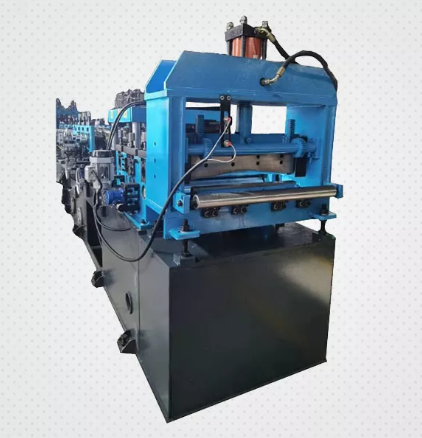
Advantages of Using Roll Forming Machines
Efficiency and Cost-Effectiveness
Roll forming machines excel in efficiency by enabling continuous production of metal profiles, reducing downtime between batches. This continuous flow allows manufacturers to produce large volumes quickly, meeting high demand without sacrificing speed. Labor costs drop because automation handles most tasks, requiring fewer operators. Material waste is minimal since the process uses metal coils optimally, bending the metal incrementally rather than cutting or stamping excess. These savings add up, making roll forming a cost-effective choice for mass production.
Precision and Consistency
One of the strongest points of roll forming machines is their ability to produce highly precise and consistent profiles. The gradual bending process ensures each part matches the exact cross-sectional shape, reducing defects and rework. Modern machines often include CNC or PLC controls that maintain tight tolerances, adjusting roller positions and feed rates automatically. This level of control guarantees that every door frame or shutter slat fits perfectly, improving product quality and assembly ease. Consistent output also supports brand reputation by delivering reliable products every time.
Durability and Reliability
Roll forming machines are built to last, often made with heavy-duty steel frames and hardened tooling to withstand continuous operation. The cold forming process strengthens the metal through work hardening, resulting in more durable finished products. Additionally, many machines incorporate sensors and monitoring systems to detect issues early, preventing costly breakdowns or defects. Proper maintenance, such as regular lubrication and alignment checks, further extends machine life. Reliable equipment minimizes downtime, ensuring steady production and long-term return on investment.
Choosing the Right Roll Forming Machine
Factors to Consider
Selecting the right roll forming machine is crucial for efficient production and long-term success. Several factors influence this decision:
● Production Volume: High-volume manufacturers benefit from fully automatic machines that offer faster speeds and minimal downtime. Smaller operations might find manual or semi-automatic machines more cost-effective.
● Profile Complexity: Complex door frame or shutter profiles require machines with precise tooling and advanced control systems, such as CNC or servo drives.
● Material Types and Thickness: Machines must handle the specific metals and thicknesses you plan to use. Some machines are optimized for lighter materials like aluminum, while others handle thicker steel.
● Automation Level: Consider how much automation you need. Fully automatic machines reduce labor and improve consistency but come at a higher price. Semi-automatic or manual machines require more operator involvement but cost less upfront.
● Changeover Time: If you produce multiple profiles, quick change machines or those with tool-less die change systems reduce downtime during product switches.
● Budget and ROI: Balance initial investment against expected productivity gains and maintenance costs. Higher-end machines often pay off through efficiency and quality improvements.
● Support and Service: Choose manufacturers offering strong after-sales support, spare parts availability, and training.
Top Manufacturers and Suppliers
Several reputable manufacturers lead the market in roll forming machines for door frames and roller shutters:
● WUXI SUNWAY MACHINERY CO., LTD (China): Known for custom solutions, high-speed automation, and IoT-enabled machines.
● Dreistern GmbH (Germany): Specializes in high-precision CNC-controlled roll forming equipment with strong R&D.
● Samco Machinery (Canada): Offers custom engineering and automation tailored for construction profiles.
● Bradbury Group (USA): Provides robust heavy-duty roll forming systems focused on automation.
● Agile Rollers (UK): Supplies flexible roll forming solutions with quick change tooling options.
Selecting a manufacturer depends on factors like location, technical support, customization capabilities, and budget.
Cost Analysis and Pricing Guide
Roll forming machine costs vary widely based on type, automation, and capacity:
Machine Type | Price Range (USD) | Key Features |
Manual Door Frame Machine | $10,000 – $30,000 | Basic operation, manual adjustments |
Semi-Automatic Machine | $30,000 – $80,000 | PLC control, partial automation |
Fully Automatic Machine | $80,000 – $150,000 | CNC control, fast profile changeover |
Quick Change Machine | $150,000 – $300,000 | Tool-less die change, high-speed production |
Additional costs include installation, training, spare parts, and maintenance. While manual machines are budget-friendly, fully automatic and quick change machines offer better long-term value through higher throughput and reduced labor.
Future Trends in Roll Forming Technology
AI and IoT Integration
Artificial Intelligence (AI) and the Internet of Things (IoT) are transforming roll forming machines. AI-powered sensors monitor the forming process in real time, detecting defects early and reducing waste. These smart sensors analyze data continuously, allowing machines to adjust parameters automatically for optimal performance.
IoT connects machines to the cloud, enabling remote monitoring and predictive maintenance. Operators can track machine health, production stats, and energy use from anywhere. This connectivity helps prevent unexpected breakdowns and extends equipment life, cutting downtime and repair costs.
Together, AI and IoT create smarter roll forming lines that optimize production, improve quality, and reduce operational expenses.
Automation and Smart Technologies
Automation in roll forming machines is advancing rapidly. Modern systems use CNC and PLC controls to automate profile changes, feeding, cutting, and punching. This reduces manual labor and speeds up production.
Smart technologies like servo motors provide precise control over speed and position, improving accuracy and repeatability. Automated lubrication systems keep rollers and bearings in top condition without stopping production.
Additionally, touchscreens and user-friendly interfaces simplify setup and operation. Data logging tracks performance and alerts operators to maintenance needs, making the process more efficient and less error-prone.
Industry 4.0 and the Future of Manufacturing
Roll forming technology is a key player in Industry 4.0—the smart factory revolution. Machines are becoming more interconnected, adaptive, and autonomous.
Digital twins simulate the forming process virtually, allowing engineers to optimize designs and troubleshoot before physical production. Machine learning algorithms analyze production data to predict failures and suggest improvements.
Factories adopting Industry 4.0 concepts gain flexibility to produce customized profiles quickly and cost-effectively. Real-time data sharing between machines, operators, and management drives continuous improvement.
The future roll forming machine will be a highly intelligent system, integrating robotics, AI, IoT, and big data analytics to deliver unmatched productivity and quality.
Conclusion
Roll forming machines shape metal strips into profiles efficiently and precisely. They are crucial for producing door frames and roller shutters. With advancements in automation and smart technologies, these machines enhance production speed, consistency, and quality. Investing in roll forming technology offers significant benefits, such as reduced labor costs and minimal material waste. Zunsheng provides innovative solutions in this field, ensuring high-quality products and excellent service, making them a valuable choice for manufacturers seeking efficiency and reliability.
FAQ
Q: What is a Roll Forming Machine?
A: A Roll Forming Machine is specialized equipment designed to shape flat metal strips into continuous profiles through a series of rollers, ideal for producing long parts like door frames or roller shutter slats.
Q: How do Z Purlin Roll Forming Machines work?
A: Z Purlin Roll Forming Machines work by feeding metal coils through rollers that incrementally bend the strip into Z-shaped profiles, used in construction for structural support.
Q: Why choose C Purlin Roll Forming Machines?
A: C Purlin Roll Forming Machines offer precision and consistency in producing C-shaped profiles, essential for building frameworks due to their strength and versatility.
Q: What are the benefits of Roof Panel Roll Forming Machines?
A: Roof Panel Roll Forming Machines provide efficient, high-speed production of metal roofing panels, ensuring durability and uniformity for large-scale projects.
Q: How do you troubleshoot Roll Forming Machine issues?
A: Troubleshooting Roll Forming Machine issues involves checking roller alignment, inspecting tooling for wear, and ensuring proper lubrication to maintain precision and prevent defects.


