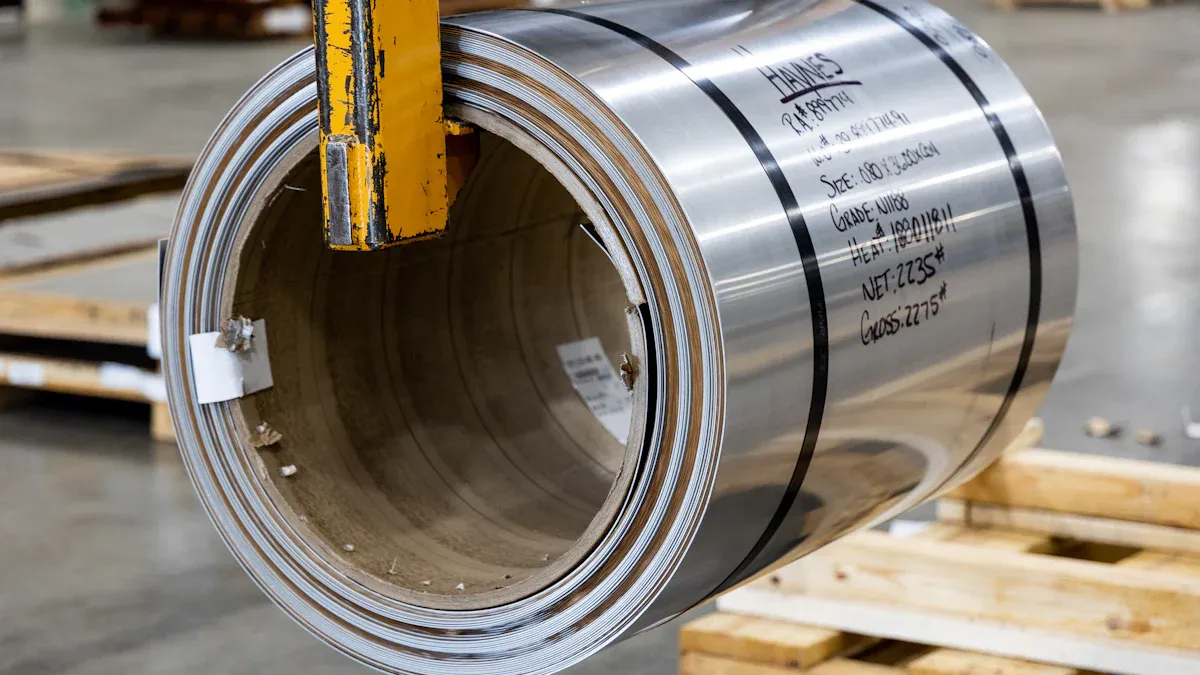
You see a metal deck roll forming machine change a metal coil into a strong deck. It does this in a few easy steps. The machine pulls the coil in. It slowly shapes the metal. Then, it cuts the metal to the right size. Every part of the machine works together. This makes sure the results are exact. If you look at older forming methods, you notice a big change:
Method | Production Efficiency | Notes |
Metal Deck Roll Forming | High | Rolling all the time makes production much faster. |
Traditional Forming | Lower | Many steps make the process take longer. |
You get faster work and better decks with this machine.
Key Takeaways
Metal deck roll forming machines change metal coils into strong panels fast. They work well for big building jobs.
The roll forming process is quicker and more exact than old ways. It makes panels that look the same and follow strict rules.
Important parts like decoilers, roll forming stands, and cutting tools work together. They help make good panels and let you use the machine for different jobs.
Cleaning and oiling the machine often can help it last longer. This also helps make strong panels.
Using roll forming machines can save a lot of money. They cut down on waste, remove extra costs, and help make panels faster.
What Is a Metal Deck Roll Forming Machine
Definition and Purpose
A metal deck roll forming machine shapes long metal strips into strong panels. These panels help support concrete slabs in buildings. You put steel or aluminum into the machine. The machine uses rollers and dies to bend the metal. Each part of the machine does a special job. The feeding system pulls the metal in. The roll forming stations shape the metal. The cutting mechanism trims it to the right length. The control system makes sure everything works safely and smoothly.
You see these machines used a lot in construction. They help make metal decks that are strong, light, and last a long time. Builders use these decks in many kinds of buildings. The machine works quickly and makes panels that look the same every time. This helps save time and money on big building jobs.
Tip: You get better results when you use a metal deck roll forming machine for large building projects. The panels it makes are great for holding heavy loads.
Applications of Roll Forming Machines
Roll forming machines are used in many construction jobs today. These machines help build floors in tall buildings, bridges, and factories. You can use them to make steel decks for parking garages, warehouses, and stores. They also work for mezzanine floors and roof decking. In homes and apartments, these machines help save materials and speed up building.
Here are some common ways people use roll forming machines:
Multi-story office buildings and shopping malls
Parking structures and garages
Hospitals and schools
Industrial plants and warehouses
Cinemas, restaurants, and event centers
Bridges and elevated roadways
You see these machines in lots of industries. They help make buildings strong, safe, and cheaper to build. The many uses of roll forming machines show how important they are for building modern cities.
Roll Forming Sheet Metal Process
When you use a metal deck roll forming machine, you follow steps to make a deck panel from a metal coil. The roll forming sheet metal process bends the metal slowly without heat. This helps you make strong and exact panels every time.
Coil Loading and Decoiling
First, you load a heavy coil onto the decoiler. Most coils can weigh up to 5 tons. The coil can be as wide as 1250 mm. You often use color steel or galvanized steel here. The coil sits on a car that moves it into place. You need machines to lift the coil because it is very heavy. Always follow safety rules to stay safe. Wear gloves and eye protection when cutting straps. Make sure the coil does not move before starting the machine.
Specification | Value |
Coil Inner-diameter | 510±30mm |
Load Capacity | Max. 5 Tons |
Coil Width Max | 1250mm |
Working Thickness | Max. 0.8mm |
Suitable Material | Color steel or galvanized steel, G550 |
Thickness Range | 0.4-0.8mm |
Coil Feed Width | 1219mm |
Tip: Always check that the coil is stacked safely and that all workers use proper lifting tools.
Feeding and Leveling
After loading, the coil unwinds and feeds into a leveler. The leveler makes the metal flat and smooth. You can use a 3-roller, 5-roller, or 7-roller leveler. The type depends on the metal’s thickness. Leveling is important for flat panels. If you skip this, the panels may not fit well.
Type of Leveler | Description |
3-Roller Leveler | Flattens sheet before roll forming |
5-Roller Leveler | Flattens sheet before roll forming |
7-Roller Leveler | Flattens sheet before roll forming |
You also trim the end of the strip and join it to the last coil if needed. Some machines use strip accumulators to store extra metal. This keeps the process running smoothly.
Roll Forming Stages
Next, the leveled strip goes through rollers. Each roller bends the metal a little more. This bending does not use heat. It keeps the metal strong and saves energy. You can make long panels that are all the same size. The roll forming process is faster than old methods like press braking.
Metric | Roll Forming | Press Braking |
Production Time | Faster for medium to high volumes | Slower for larger orders |
Energy Usage | More economical | More energy-intensive |
Labor Costs | Operated by fewer workers | Labor-intensive for larger volumes |
Length Handling | Handles long lengths continuously | Limited to shorter lengths |
Tolerances | Produces tight tolerances | Less precise for complex shapes |
You can add pre-punch presses to make holes or notches. The roll forming sheet metal process uses controls and sensors to keep rollers in the right spot. This helps you get good quality. Regular checks help you fix problems fast.
Note: The no-heat, slow bending in roll forming sheet metal saves energy and gives you better accuracy.
Cutting and Discharge
At the end, you cut the metal to the right length. Machines use precut or postcut methods. Precutting gives smooth ends and is easy to care for. But it can cause more end flare. Postcutting gives better control and less end flare. But it can leave rough ends and costs more at first.
Cutting Method | Pros | Cons |
Precut | - Burr-free ends
- Simple maintenance
- Prevents cutoff distortion | - Can increase end flare
- Needs more forming stations
- Harder to control quality in complex parts |
Postcut | - Higher production rate
- Better part control
- Reduces end flare
- Extends roll life | - Higher initial costs
- Maintenance for cutoff die
- May cause rough ends |
After cutting, the panels move to the output table. You can stack them for easy moving. Some machines add more steps, like punching or assembly, if you need special features.
Here is a summary of the main steps in the roll forming sheet metal process:
Step | Description |
1. Coil Loading | Load metal coils onto the uncoiling device. |
2. Coil Flattening | Feed the coil through a flattener to remove the coil set. |
3. Lead End Trimming | Trim and join the lead end to the previous coil. |
4. Strip Accumulators | Store sections of metal strips for efficiency. |
5. Pre-Punch Presses | Punch holes and notches as needed. |
6. Roll Die Mill | Shape the flat metal into the final profile. |
7. Cutoff & Discharge | Cut the shaped metal to length and discharge. |
8. Secondary Operations | Add extra punching or assembly if needed. |
The roll forming sheet metal process is fast, accurate, and saves money. You get good results with less energy and work. The process also lets you make long and complex shapes easily.
Key Components of a Metal Deck Roll Forming Machine
A metal deck roll forming machine has many important parts. Each part does a special job. These key components help you shape, cut, and finish strong metal decks. The machine works fast and can change for different jobs. Let’s look at each part and see how it helps you get good results.
Decoiler and Straightener
The decoiler holds the heavy coil and unwinds it. It keeps the metal strip tight. The strip feeds into the machine smoothly. The straightener flattens the metal. This helps you get panels without bends or waves. Many decoilers unwind the coil by themselves. They keep the tension steady. Some have a coil cart for quick changes. Hydraulic controls move the coil into the right spot.
Feature | Description |
Automatic unwinding | Unwinds the metal strip and keeps tension steady. |
Tension maintenance | Makes sure the strip feeds smoothly into the next stage. |
Automatic alignment | Keeps the strip centered for accurate shaping. |
Coil cart | Lets you change coils quickly and safely. |
Hydraulic control | Moves the frame for perfect positioning. |
Tip: A good decoiler and straightener let you use different coil sizes and materials.
Roll Forming Stands
Roll forming stands hold rollers that bend the metal. The rollers shape the metal step by step. More stands help you make deeper or more complex deck shapes. The stands must be strong and stable. They keep the rollers lined up. This helps you avoid waves or defects in the panels.
Factor | Influence on Design |
Number of Stands | Deeper or more complex profiles need more stands. |
Profile Complexity | Complex shapes require more careful design. |
Material Type | Thicker or harder metals may need stronger stands. |
Waviness Risk | Wide flat sections can cause waviness, so stands must support the metal well. |
You can adjust the stands for different deck designs. The stands and rollers shape the metal with care.
Pre-Punch Press
The pre-punch press adds holes or notches before rolling. You use it when you need slots, holes, or special cutouts. The pre-punch press works fast. It keeps the process moving. You can change the punch dies for different jobs. This gives you flexibility for many building needs.
Punches holes for wiring or drainage.
Adds notches for easy assembly.
Can be set up for different patterns.
Note: The pre-punch press helps you finish panels in one pass. This saves time and labor.
Cutting Mechanism
After shaping, you cut the metal deck to the right length. The cutting mechanism does this job. You can use saws, shears, lasers, or plasma cutters. Each type gives you clean edges and accurate sizes. Some machines use hydraulic tanks to power the cutters. This makes cutting faster. You can pick the cutting method that fits your project.
Cutting Method | Description |
Sawing | Cuts through the metal with a saw blade. |
Shearing | Uses a sharp blade to slice the metal cleanly. |
Laser Cutting | Uses a laser for very precise and smooth cuts. |
Plasma Cutting | Melts the metal with a plasma arc for fast cutting. |
A good cutting mechanism helps you avoid rough edges. It keeps every panel the same size.
Control System
The control system is like the brain of the machine. You use a touchscreen panel to set speed, length, and profile. The system stores different settings. You can switch jobs quickly. Real-time monitoring lets you track production and spot errors fast. Some control systems use AI to check for defects. This helps keep quality high. You can make many types of decks with less effort.
Feature | Description |
User-Friendly Interface | Easy touchscreen controls for quick setup. |
Programmable Settings | Save and load different deck profiles. |
Real-Time Monitoring | Watch production and fix problems right away. |
AI Quality Control | Checks panels for defects as they are made. |
Tip: A smart control system helps you work faster. You can switch between jobs with ease.
Output Table
The output table sits at the end of the machine. It catches the finished panels as they come out. The table supports the panels. This keeps them from bending or getting damaged. You can stack the panels on the table for easy moving. The design of the output table can change based on your needs. Some tables have rollers or lifts for faster stacking. This helps keep your work area safe and organized.
Function/Design Aspect | Description |
Location | At the end of the roll forming line |
Purpose | Supports and collects finished panels |
Variability | Can include rollers, lifts, or stackers |
Role | Keeps production smooth and efficient |
Note: A well-designed output table lets you handle high volumes and different panel sizes.
Table: Overview of Key Components and Their Functions
Component | Function | Role in Shaping/Finishing |
Decoiler & Straightener | Feeds and flattens metal strip | Prepares metal for accurate shaping |
Roll Forming Stands | Gradually bend metal into shape | Create the deck profile |
Pre-Punch Press | Adds holes or notches | Customizes panels for building needs |
Cutting Mechanism | Cuts panels to length | Ensures clean edges and correct size |
Control System | Sets and monitors machine settings | Maintains quality and allows flexibility |
Output Table | Collects finished panels | Supports and organizes final products |
All these key components work together. They give you the flexibility to make many types of metal decks. You can adjust the machine for different jobs, materials, and sizes. This makes your work faster, safer, and more precise.
Durability and Benefits
Efficiency and Precision
A metal deck roll forming machine works fast and makes many panels quickly. You can use long strips of metal and finish jobs faster than old ways. This helps you stay on schedule and not fall behind.
Roll forming is great for making lots of panels fast.
The process saves time and uses less material, so there is less waste.
Every panel is the same size and shape, so you always get good quality.
Precision roll forming keeps sizes very close, as tight as ±0.01mm, so you meet building rules.
Consistency and High Volume
These machines make sure every panel is the same. The uncoiler gives the metal, the roll stands shape it, and the cutter trims it. Automation lets the machine go up to 60 meters each minute. The length is measured by an encoder, and hydraulic cutters keep panels the same. This control helps you fill big orders without losing speed or quality.
Cost Savings
You save money in many ways with this machine. Here is a table that shows how you save more:
Cost Saving Aspect | Description |
Reduced Waste | You cut panels to the right size, so you use less metal and throw away less. |
Elimination of Middleman Markups | You make your own panels, so you do not pay extra to other companies. |
Increased Efficiency in Production | You control your work, so you need fewer workers and things run smoother. |
You save more money as you make more panels and waste less. You also do not pay extra for packing or shipping from other companies.
Product Durability
Every panel is strong and lasts a long time. The roll forming process shapes metal with ribs and embossments. These make the deck stronger and help it stick to concrete.
Roll forming machines make floors that are strong and stable.
The process keeps the quality and strength the same for every panel.
Embossments help the deck hold together better, so it lasts longer.
Your panels will last for years, even if the weather is bad.
If you take care of your machine, it can last 15 to 25 years. Some machines last up to 30 years. Clean and oil your machine often to keep it working well and make sure your panels stay strong.
Tip: Check and clean your machine often. This helps your panels stay good and your machine last longer.
You learned how every step and part in a metal deck roll forming machine helps make strong and exact panels. These machines help you work faster and make better products. When picking a machine, think about what your business needs and how much money you can spend. You should also think about how long, thick, and shaped your panels need to be. Look at what the machine can do and if the maker will help you. Learn more about roll forming technology to find the best machine for your work.
FAQ
What materials can you use in roll forming machines for construction?
You can use steel, aluminum, and other metal coils. Steel is used most often in construction. These machines shape metal into panels for roofs and decks. They help with many building and industry jobs.
How do roll forming machines improve production flexibility in construction?
Roll forming machines let you change panel shapes fast. You can set them for decking or roofing. This makes it easy to meet new building needs. You do not have to stop the machine for long.
Why do builders choose roll forming machines for roofing and decking?
Builders like roll forming machines because they make strong panels. The panels are all the same size and shape. You get exact steel roofing and decking. The machines work quickly and make many panels. This helps you finish building jobs on time.
Can roll forming machines handle both roofing and decking for large construction projects?
Yes, roll forming machines can make both roofing and decking. They shape steel and other metals into panels. You can use them for big buildings, warehouses, and factories.
What maintenance do roll forming machines need in the construction industry?
You should clean and oil your machine often. Check the rollers and cutting parts for damage. Good care keeps your machine working well. This helps you make good steel roofing and decking for building jobs.